The report itself
Open the PDFMake one of your own, free
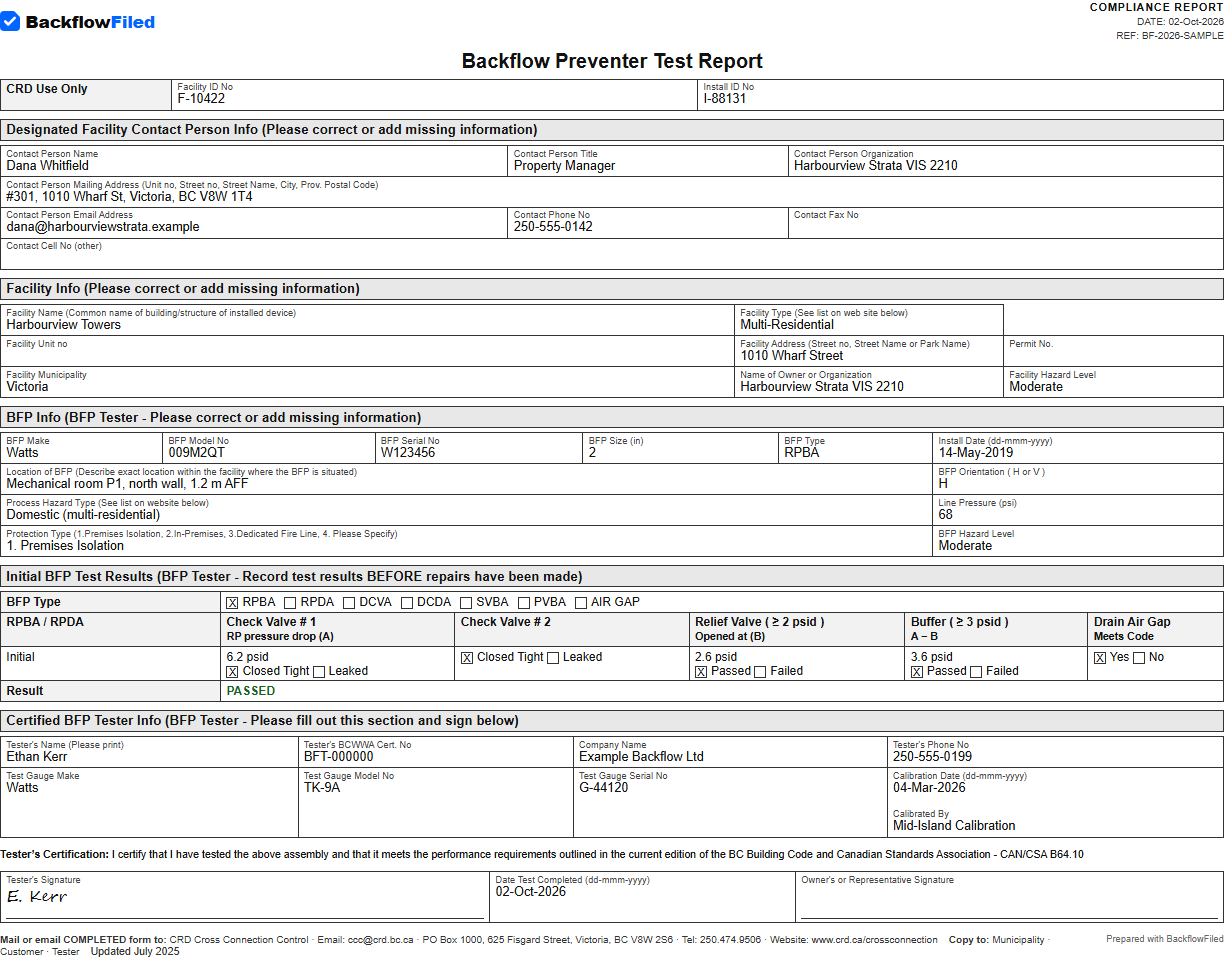
A sample, not a customer's. The readings and the building are fixtures — a real report names a real address, and this page is public.
Why the layout matters
A cross connection control officer reads hundreds of these. A form that approximates the authority's own is a form they have to squint at, and a field in the wrong place is a reason to send it back. This is checked field by field against the CRD's published PDF — the section headers, the checkbox grid, the psid columns, and the footer instruction that tells you where to send it.
Two things on this form the bylaw is specific about
The clock runs from the notice, not from your test. Bylaw 3516 s.7.2 gives 35 days from the notice to test, and requires the report to be submitted and received by the Cross Connection Control Officer within it. Received, not sent. Testing on day 34 and filing on day 36 is late. The deadline shown on a job in the app counts from the notice date for exactly this reason.
The obligation is the customer's, not yours. s.7.2 puts the duty to have the device tested and the report filed on the person responsible for the premises. Most marketing in this market implies otherwise. It matters, because it is the building owner the authority pursues — and it is why the reminder we send goes out in your name, to them.
A failed test does not go by email
s.7.3 requires a failed device to be submitted through the CRD's CCC Portal within 14 days, and gives 30 days to repair, retest and notify. No software can make that portal submission for you, and we will not pretend to. What the app does is put both clocks on the job and have every value ready to enter.
Every one of them is checkable
The report carries a verification code. A property manager, an insurer or the authority can open it and confirm the document is real, the date, the result, and whether a newer version has superseded it — with no account and no login. Check one.